Clink, Chatter, Chorus: The New Year’s Eve Running Order That Lands on Auld Lang Syne

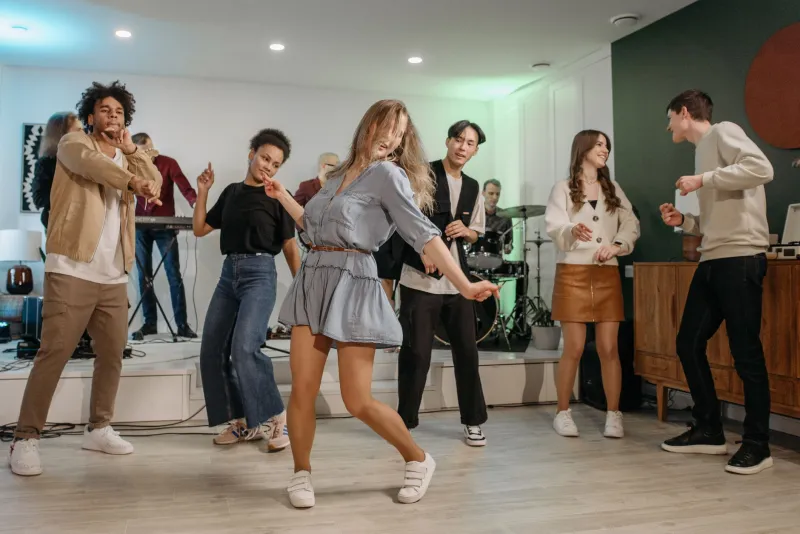
Photo: Tahiru Rajab, CC BY-SA 4.0, via Wikimedia Commons
New Year’s Eve playlists have a habit of behaving like background music until about 11:58, when someone suddenly remembers the singing is supposed to be the point. The fix isn’t a longer playlist or a bigger speaker. It’s a running order — a gentle ramp from chatter to chorus that gives every generation a reason to join in before the bells.
Here’s a plan for 2026 that works in a sitting room in Sheffield, a village hall in Devon or the back room of a pub in Glasgow. It starts at ten, peaks at midnight, and treats Auld Lang Syne as the destination rather than an afterthought.
The Three-Act Structure of a Good New Year’s Eve Singalong
Act one is background: songs people know but don’t have to perform. Act two is participation: request cards, actions, daft choruses. Act three is the communal belt: the big, arms-round-shoulders numbers that carry the room to midnight. Get the order right and you won’t need to beg anyone to sing.
10pm: The Warm-Up That Doesn’t Feel Like a Warm-Up
At ten, the room is still full of coats and small talk. Keep the volume conversational and choose songs with familiar choruses but no pressure. Think ‘Brown Eyed Girl’, ‘Daydream Believer’, ‘Build Me Up Buttercup’ and ‘Mr Blue Sky’. In a pub, ‘Come On Eileen’ earns its place early because everyone knows the ‘too-ra-loo-ra’ bit even if they claim not to.
This is also the moment to put out request cards: index cards, a few pens and a bowl. Ask guests to write a song and a one-line memory — ‘Our first dance’, ‘Nan’s kitchen’, ‘That coach trip to Blackpool’. Draw one every twenty minutes. It gives shy singers a reason to lean in and gives you a ready-made bridge between generations.
10:45pm: The Request-Card Slot
Requests do two jobs. They hand the playlist over to the room, and they flush out the songs that actually mean something. You’ll get teenagers asking for ‘Mr Brightside’ or ‘Shotgun’, grandparents asking for ‘The Gambler’ or ‘Loch Lomond’, and someone asking for ‘Wonderwall’ because someone always asks for ‘Wonderwall’.
Don’t fight it. Group the requests so the mood doesn’t lurch. A pop request can follow a folk one if the tempo is similar. If a request is a dirge, save it for after midnight or pair it with a chaser. The aim is a room that keeps singing, not a lecture on musical taste.
11pm: The Generational Handover
This is the hour when the party either becomes a singalong or stays a drinks reception. Move from background to participatory with songs that have built-in jobs: echoes, actions, call-and-response. ‘The Gambler’ has a chorus made for a circle. ‘Country Roads’ gives everyone a ‘take me home’ to lean into. ‘Hey Jude’ supplies its own na-na-na safety net.
Ask one grandparent to lead a verse. Ask one teenager to pick the next track. The handover works when nobody is performing and everybody is joining in.
11:30pm: The Communal Singalong Block
Now the gloves come off. This is the eight-to-ten-song run that turns a room into a choir: ‘Sweet Caroline’ (arms up for the ‘so good’ bit), ‘Don’t Stop Me Now’, ‘Livin’ on a Prayer’, ‘9 to 5’, ‘I’m Gonna Be (500 Miles)’ and ‘Dancing Queen’. Keep the lyrics visible on a TV or a printed sheet. Keep the volume loud enough to cover the shy singers but not so loud that people stop hearing themselves.
The Tricky Bit: Landing Auld Lang Syne
Auld Lang Syne isn’t hard because of a key change in the sheet music. It’s hard because of the key change in the room. You’re moving from shouty pop to a lower, gentler melody, and the first line sits low. If a soprano starts it after ‘Livin’ on a Prayer’, the room will follow her up and run out of air by the second verse.
So plan the landing. At 11:55, cut the big songs. Have a trusted singer hum the starting note, low and quiet. Put the words up large: first verse, chorus, and the arm-crossing bit. At ‘And there’s a hand, my trusty fiere’, show everyone how to cross their arms and join hands with the people either side. Do it once before midnight if the room is game.
Countdown-Timed Running Order
| Time | What happens | Songs |
|---|---|---|
| 22:00–22:45 | Warm-up, low volume | Brown Eyed Girl; Daydream Believer; Build Me Up Buttercup; Mr Blue Sky |
| 22:45–23:15 | Request cards | Guest picks, grouped by tempo |
| 23:15–23:40 | Generational handover | The Gambler; Country Roads; Hey Jude; Loch Lomond |
| 23:40–23:55 | Big chorus block | Sweet Caroline; Don’t Stop Me Now; Livin’ on a Prayer; 500 Miles; Dancing Queen |
| 23:55–23:57 | Gather, lyrics up, starting note | Silence or a quiet hum |
| 23:57–00:00 | Auld Lang Syne | First verse and chorus, arms crossed |
| 00:00–00:10 | Hugs and one last song | Happy New Year (ABBA) or Dancing Queen |
Keeping Every Generation in the Same Chorus
The secret isn’t finding songs everyone loves. It’s finding songs everyone can join without knowing all the words. Choruses, echoes and repeated lines do the work. Seat people in a circle rather than rows. Keep the lighting low but not dark. Let the teenagers run the first hour of requests so they feel ownership, then hand the big block to the oldest singer in the room.
Small Rooms, Village Halls and Pubs
In a sitting room, one speaker and a guitar is plenty. In a village hall, use a projector for lyrics and a microphone for the countdown. In a pub, talk to the landlord first, keep the request cards off the bar and don’t try to out-sing the regulars. The best New Year’s Eve singalong is the one that feels like it happened by accident. It didn’t. It happened because someone made a running order.
At Songs4U, we’d rather hear a wobbly chorus from the whole room than a perfect performance from one person. So this year, print the lyrics, sharpen the pencils and put Auld Lang Syne at the end — where it belongs.